Features
Managed LibreOffice pool
A supervised pool of headless LibreOffice instances, driven over the native UNO protocol. Instances stay warm — conversions take milliseconds, not process-startup seconds — and are health-checked, recycled after a configurable number of jobs, and restarted with backoff on failure. A shell-out fallback (with a circuit breaker) keeps converting even if the pool is down; external UNO endpoints are supported too.
Async jobs & webhooks
Submit a job and poll, or give a webhook URL and get an HMAC-signed callback when the document is done. A synchronous endpoint handles the simple cases in one round-trip and transparently falls back to job polling for long conversions. Retries, timeouts, and per-job logs are built in.
Apps, API keys & quotas
Admin-issued API keys per client application (hashed at rest, shown once), with per-app quotas — file size, jobs per day, jobs per minute, concurrency — and request restrictions by source IP/CIDR/hostname and Referer. Every app's usage is accounted daily and survives job-row retention.
Admin web UI
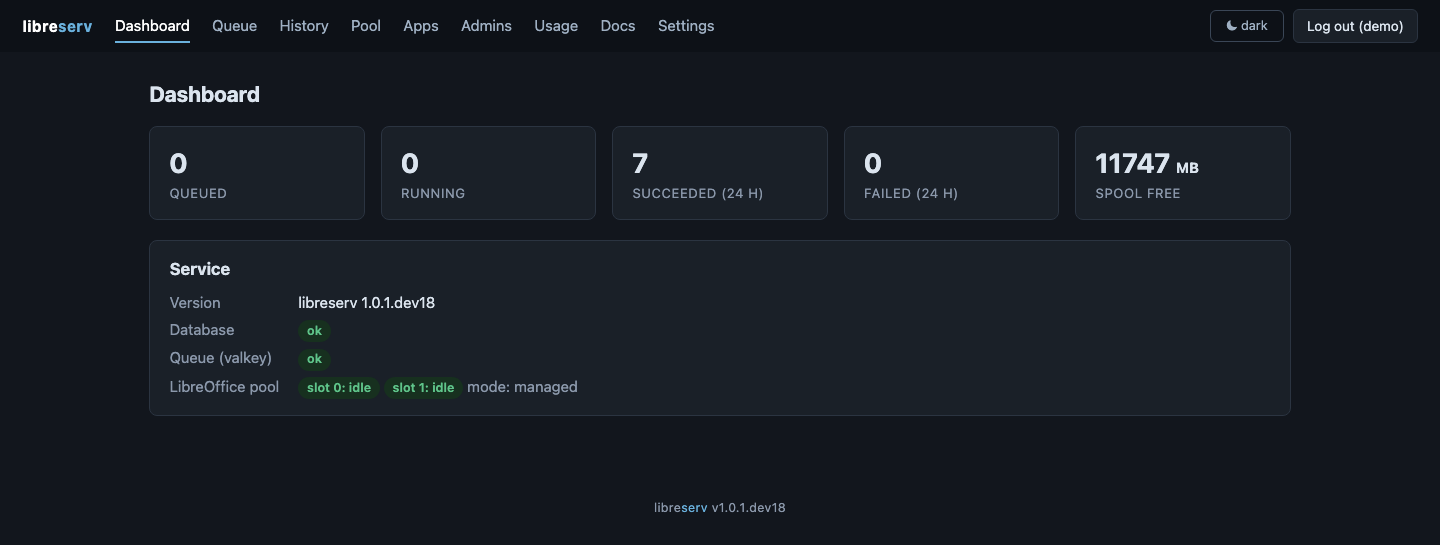
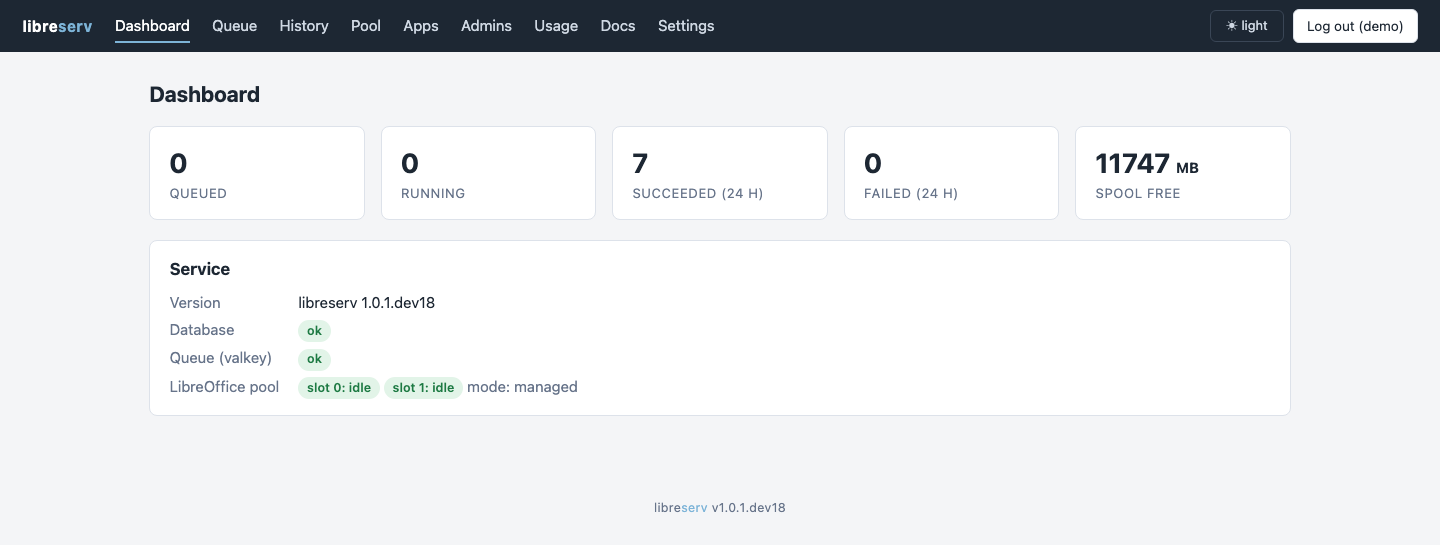
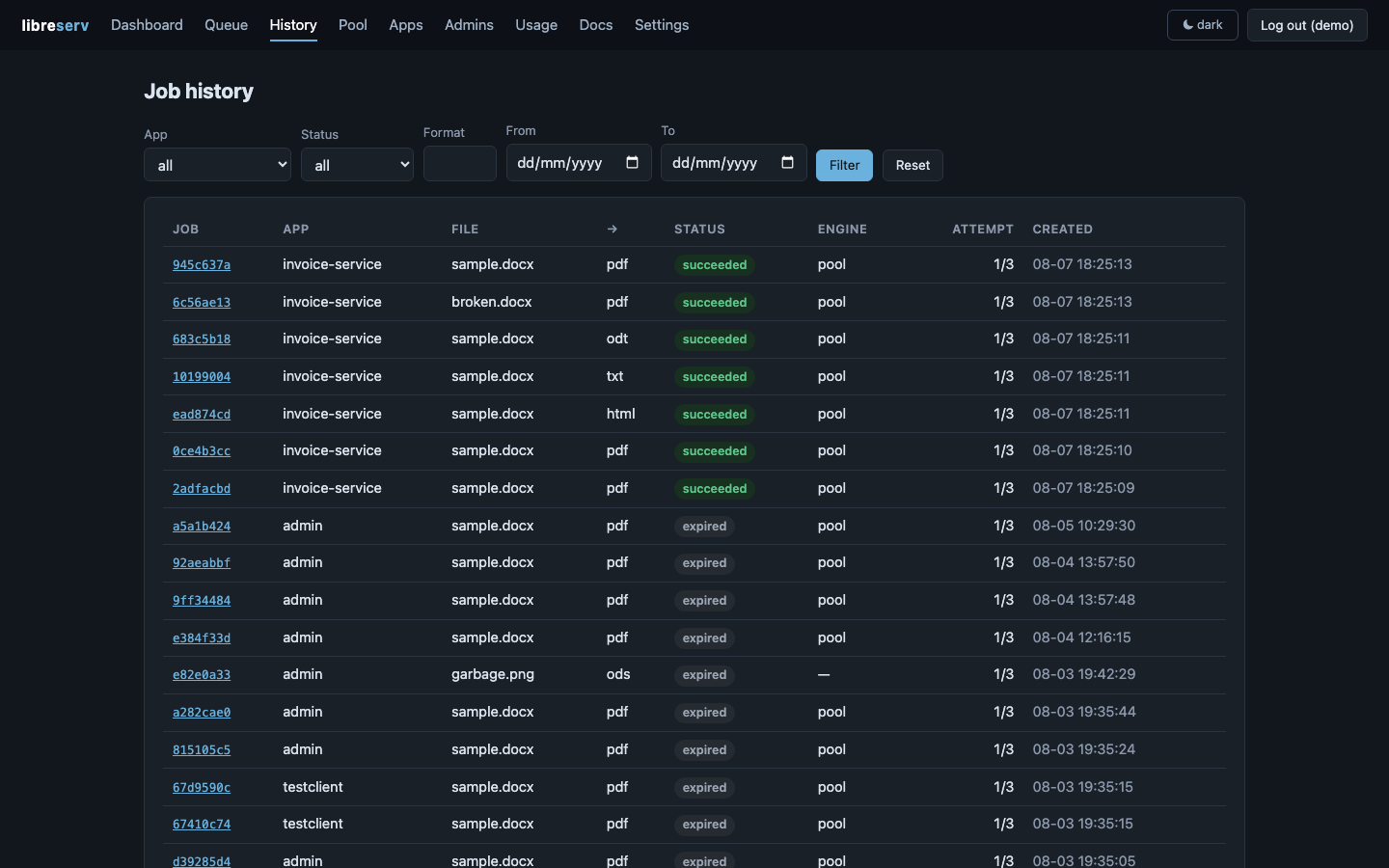
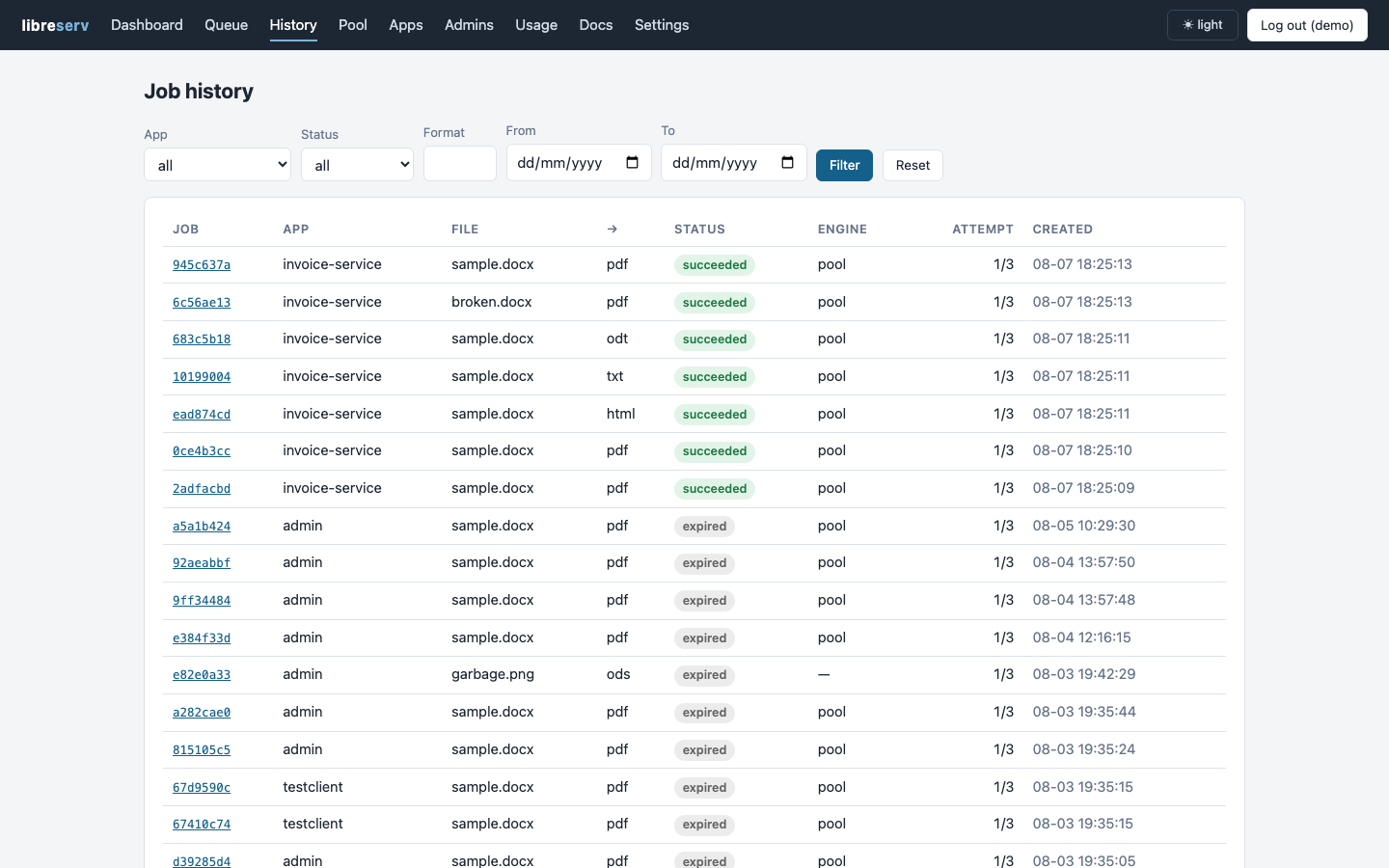
Queue and job history with event timelines, per-job logs, and downloads of both the original and the converted document while retention lasts. App and admin management with a full audit trail (who created what, when). Usage reports with CSV export. Light and dark mode.
Live pool diagnostics
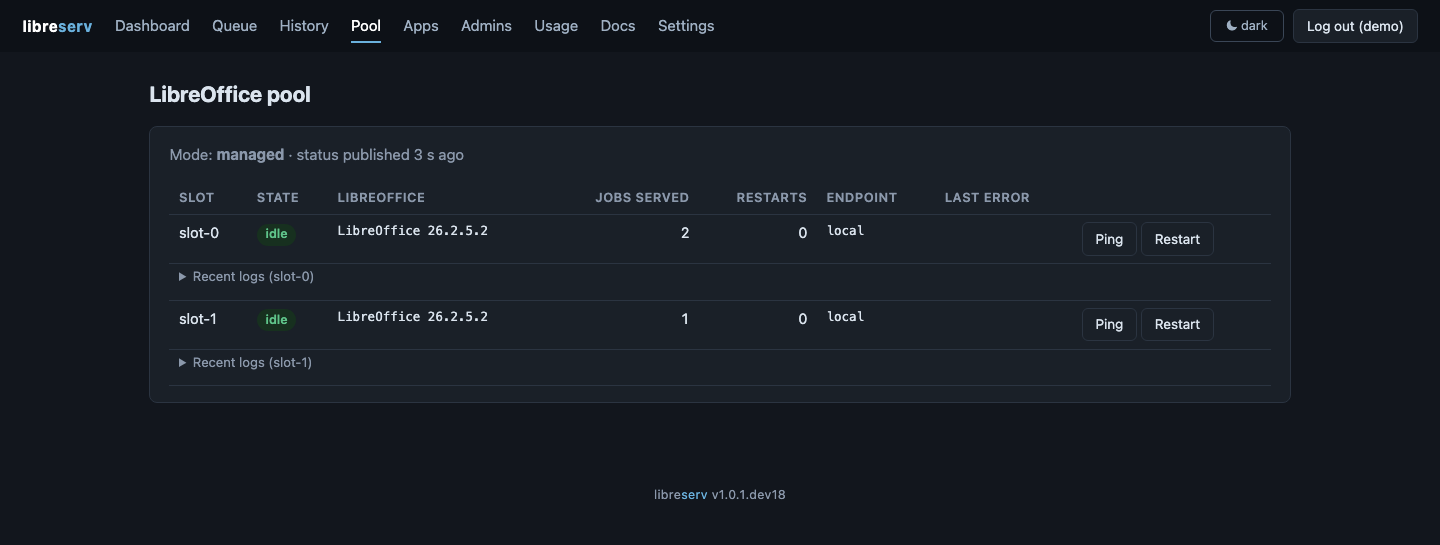
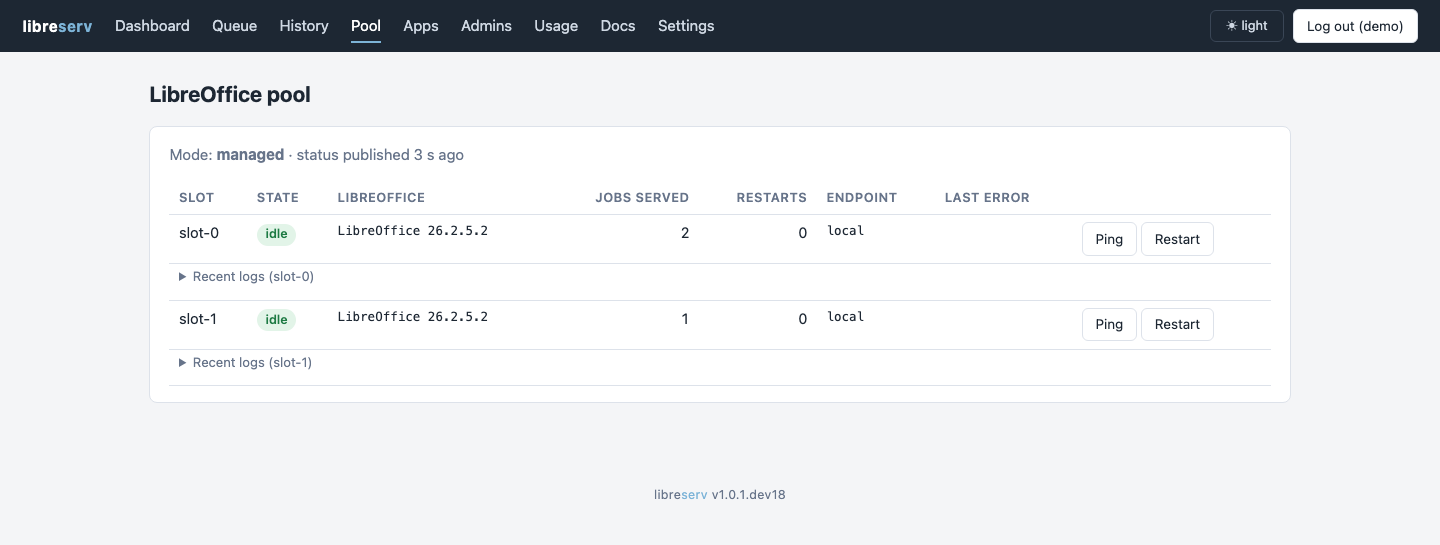
The Pool page shows each slot's state, the LibreOffice version it runs, its recent driver logs, and a Ping button that makes the worker prove the slot is alive right now with a real UNO round-trip — no guessing from stale status.
Built for operations
Health and readiness endpoints, structured logs, configurable
retention for files and history, quota-aware error responses, and a
single TOML config with environment overrides. The version you run is
visible in the UI and at /health.
The web UI
Screenshots from a live instance (they follow this page's color theme — try the toggle in the corner):